This story is syndicated from The Eagle Eye, the newspaper of Marjory Stoneman Douglas High School in Parkland, FL. The original version of the story ran here.
Seven years after the Parkland shooting, Florida lawmakers passed House Bill 759 for the third time in three years, attempting to repeal a law passed after the 2018 massacre that prevents people under age 21 from buying rifles and shotguns. The law, introduced by Republican Rep. Michelle Salzman, asserts that the age limit is unconstitutional under the Second Amendment.
Though the bill has continuously stalled in the Florida Senate, it’s not just the community here at Marjory Stoneman Douglas High School who are tired of the attempts.
Senate Bill 7026, signed into law by former Florida Gov. Rick Scott in 2018, was also known as the Marjory Stoneman Douglas High School Public Safety Act. It was the first time in thirty years that Florida had passed any gun restrictions. It also allotted additional funds for school safety.
Not only would HB 759 lower the age to purchase guns in Florida to allow 18-20-year-olds to purchase semi-automatic rifles, but it would also allow 18-20-year-olds to purchase handguns from unlicensed sellers with no background checks. Even though people aged 18-20 are three times more likely to commit gun homicides than those 21 and older, Florida lawmakers consider the 2018 law unnecessary.
Better than inaction, the Marjory Stoneman Douglas High School Public Safety Act still fell short of the expectations of many Parkland students and parents. It did not ban assault and assault-style weapons, nor did it allow staff members to carry concealed weapons. MSD students expressed that these were only small steps toward resolving gun violence in schools.
“These are the baby steps we need,” alum Delaney Tarra said. “We have a lot further to go, but progress is progress and that’s not to be denied.”
It comes as no surprise that HB 759 has been continuously lobbied by both Gun Owners of America, Florida Carry and the National Rifle Association. The NRA previously challenged the original law in court but lost as the court upheld the age-limit standard as still constitutional.
“I’m vindicating people’s constitutional Second Amendment rights,” Florida Gov. Ron DeSantis said, who supports HB 759. “You have some 20-year-old marine …they come here, and they can’t purchase a rifle to go hunting or something, it’s not something that is consistent with due process.”
DeSantis’ claim about hunting rights rings hollow. Shotguns are the guns most commonly used for hunting and are currently banned under the 2018 laws. There is significant leeway, however. The restriction does not impede the hunting abilities of those under 21 — receiving and using a gun as a gift is perfectly acceptable as long as the individual is at least 18 with parental permission.
What DeSantis fails to address is that handguns are the weapon most commonly used for homicides and mass shootings. Additionally, only as few as 1% of Floridians own a hunting license, suggesting this is a non-issue for the majority of voters.
The misdirection doesn’t stop there. The lawmakers who support the repeal have brought up other nonsensical reasons, like how the current law may prevents young single mothers from buying guns to protect themselves.
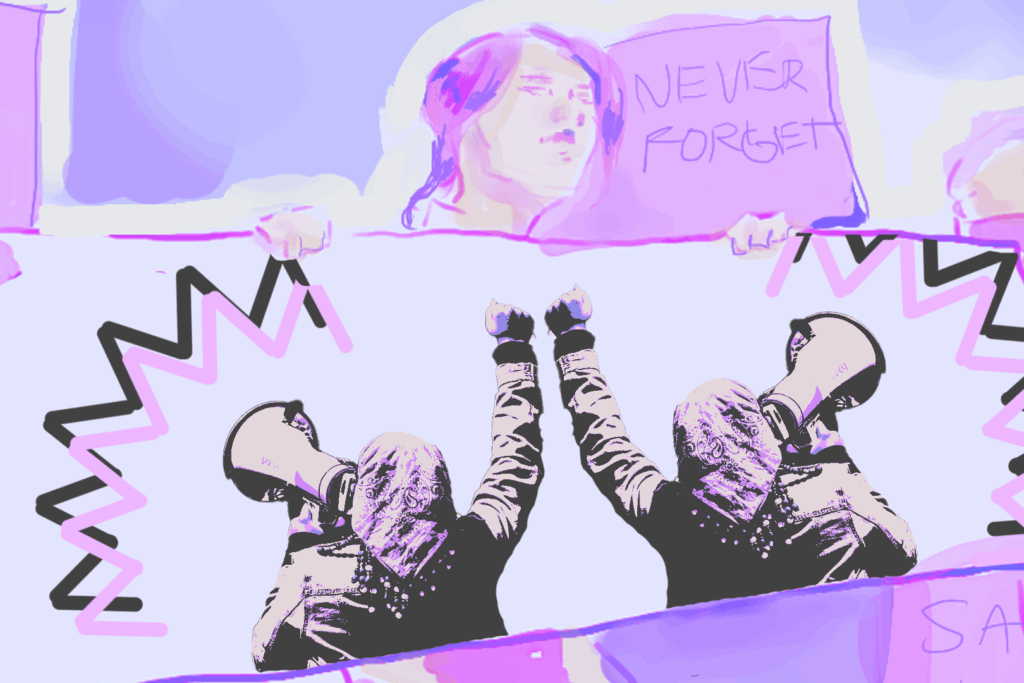
The push for this bill is a slap in the face to the students who protested for these protections after the deaths of their classmates.
The research is clear: owning more guns does not translate to a safer home. Beyond the dangers of misfire, suicide becomes easy. There is evidence that owning a gun actually puts women at significantly greater risk of violent injury and death.
The back-and-forth negotiating surrounding these laws raises the question of whether Florida’s representatives are actually working in the interest of the people they represent. The majority of Florida voters support a nationwide ban on the sale of assault weapons and high-capacity magazines that fire more than 10 rounds — so why don’t their representatives aim for the same?
It is important to note that even within closely affected communities like Parkland, there has been little opposition to the laws that came in its wake. No student action and no protests have occurred since the Act was passed, a stark contrast to the intense student action that first supported it.
In a country where the majority of Americans say it is too easy to legally obtain a gun, in a nation where school shootings are the highest in the world and in a state where an average of one person is killed every three hours due to guns, it is absolutely unreasonable for lawmakers to loosen gun regulations.
Yet, burdened by other headlines, communities are seemingly doing little to preserve the few gun protections they have. Students and parents alike need to perform their civic duties, speak up and work towards a world in which fewer preventable tragedies occur — in Florida and in the rest of the country alike. That vision cannot materialize when laws are regressive instead of responsive.