This piece was originally published in the Opinion section of USA Today as part of a content partnership between USA Today and SUNN.
If “didn’t vote” had been a candidate in the 2024 presidential election, they would’ve beaten Donald Trump (77.3 million votes) and Kamala Harris (75 million votes) by a long shot. That’s because 89 million eligible voters did not show up to the polls.
I’m a 17-year-old high school senior five months shy of voting age and no political scientist, but it’s clear even to me that America’s longstanding problem with low voter turnout is a gaping issue in a participatory democracy. I was delighted that Nov. 3’s midterms had huge voter turnout relative to other recent elections. But I take issue with the popular notion that voters who showed up represented America “delivering a verdict.”
Let’s be clear, less than 50% of eligible voters actually cast ballots in the midterms – the rest stayed home. That’s not America as a whole delivering anything; it’s a verdict determined by a narrow majority. To me, that’s an unfulfilled democratic promise.
Even in the best of times, America has an alarmingly low turnout rate compared with democracies like Belgium and Australia, where recent rates have been close to 90%.
This participation gap poses a problem for my generation especially: Just over a quarter of eligible young voters showed up at the midterms. This was the second-highest youth turnout during midterms in three decades, but that’s not saying much. As a percentage of all voters, the participation of 18- to 29-year-olds was 12%, the lowest of all age groups.
US should make voting mandatory – and fine nonvoters
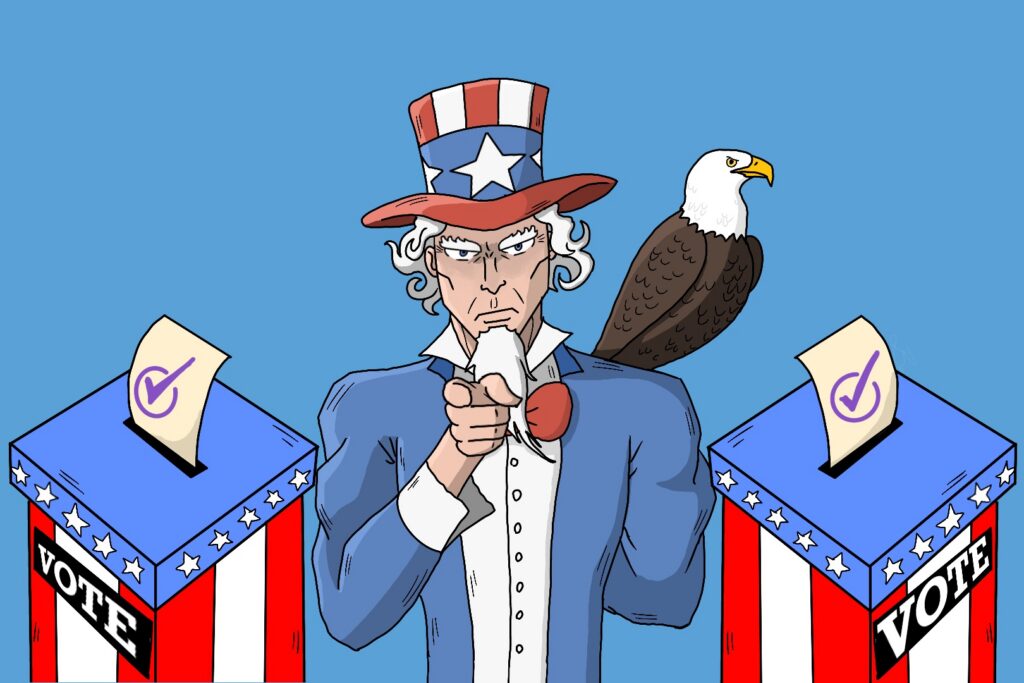
But I’m a solutions-oriented guy, and after speaking with experts, I see a way to fix this. It may sound crazy, but hear me out and judge me later: Voting should be mandatory, not voluntary, in America, so that our republican government actually represents what all Americans want.
A voluntary system lets voters tune out and allows politicians to get lazy. Candidates build their campaigns around the voters they expect to show up and ignore those who will likely stay home, according to Miles Rapoport, executive director of 100% Democracy, an organization dedicated to universal voting.
A former politician, Rapoport explained that high-propensity voters are more likely to get their legislative wish list addressed. Many political experts consider Medicare to be untouchable because it impacts seniors who vote often, whereas funding for programs like Head Start that serve poor kids (who can’t vote) are frequently on the chopping block.